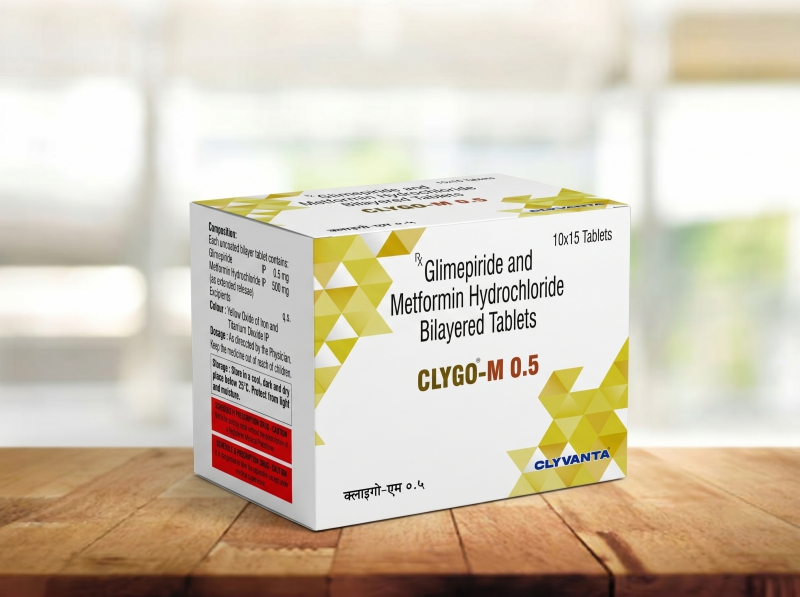
CLYGO Tablet PR belongs to a category of medicines known as anti-diabetic drugs. It is a combination of two
medicines used to treat type 2 diabetes mellitus in adults. It helps control blood sugar levels in people with diabetes.
CLYGO Tablet PR should be taken with food. Take it regularly at the same time each day to get the most benefit.
Your doctor will decide what dose is best for you, and this may change from time to time according to how it is
working, according to your blood sugar levels.
Keep taking this medicine, even if you feel well or your blood sugar levels are controlled. If you stop it without
consulting your doctor, your blood sugar levels could rise and put you at risk of kidney damage, blindness, nerve
problems, and loss of limbs. Remember that it is only part of a treatment program that should also include a healthy
diet, regular exercise, and weight reduction as advised by your doctor. Your lifestyle plays a big part in controlling
diabetes.
The most common side effect of CLYGO Tablet PR is low blood glucose levels (hypoglycemia). Make sure you
recognize the signs of having low blood glucose levels, such as sweating, dizziness, headache, and shaking, and
know how to deal with them. To prevent this, it's important to have regular meals and always carry a fast-acting
source of glucose, such as sugary food or fruit juice, with you. Drinking alcohol can also increase your risk of low
blood sugar levels and should be avoided. Other side effects that may be seen on taking this medicine include taste
changes, nausea, diarrhea, stomach pain, headache, and upper respiratory tract infection. Some people may find
that they put on weight with this medicine.
You should not take it if you have type 1 diabetes mellitus, diabetic ketoacidosis (high levels of acid in your blood), orsevere kidney or liver disease. Before taking this medicine, tell your doctor if you have ever had heart disease. It may not be suitable. Pregnant or breastfeeding women should also consult their doctor before taking it. Your blood sugar levels should be checked regularly, and your doctor may also advise blood tests to monitor your blood cell counts and liver function.